

From AI Innovation to Measurable Business Impact: Highlights from Advertising Week New York 2026 (Part 1)
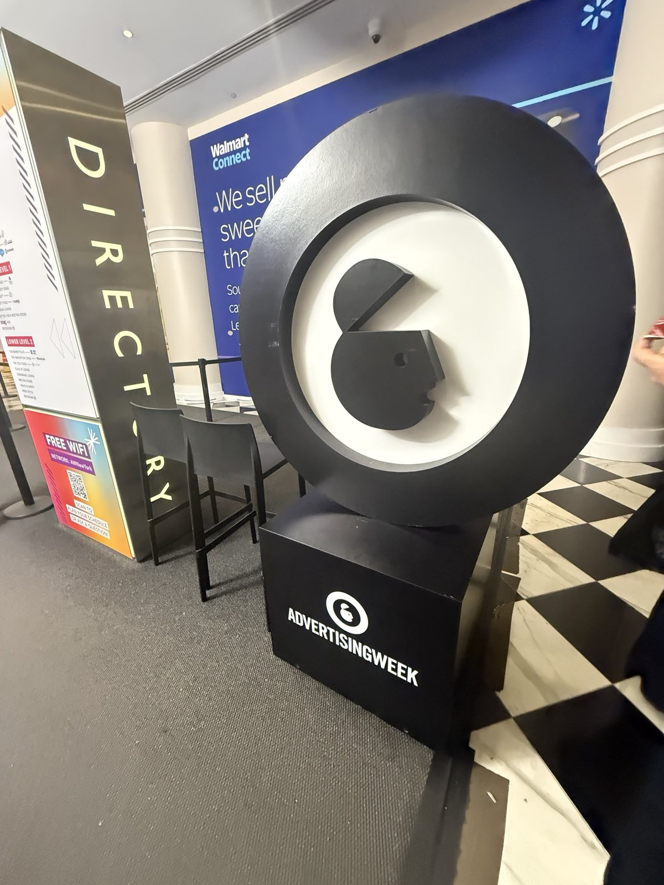
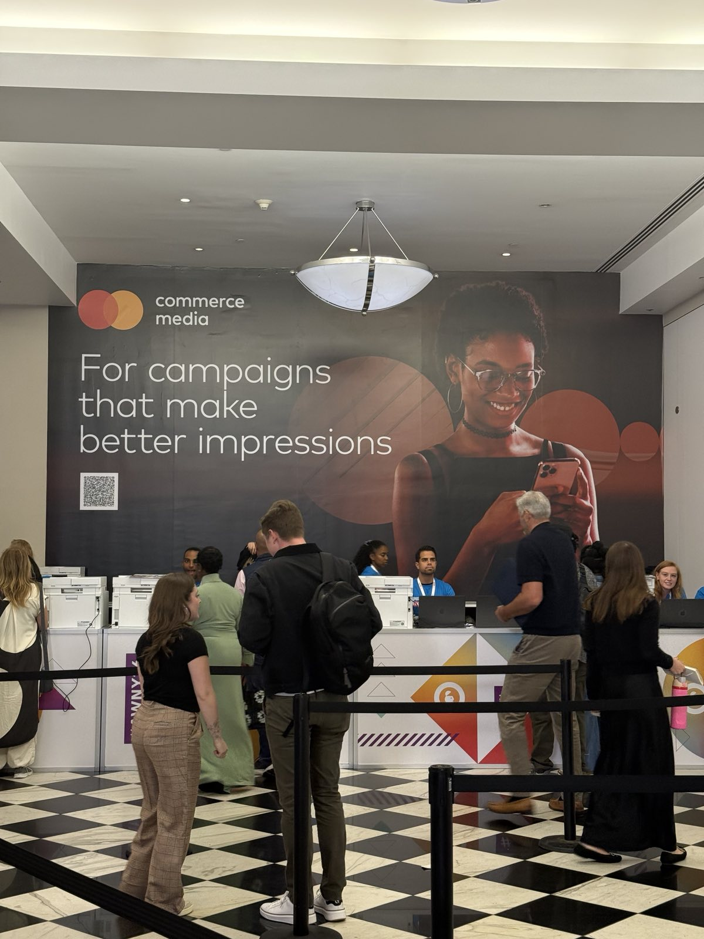
-Advertising Week New York 2026 signage at The Penn District-
From October 5 to 8, 2026, I attended Advertising Week New York 2026 at The Penn District in Manhattan. This was my second year at the event. The organizers billed this edition at more than 1,300 speakers and 500+ sessions over four days, bringing together brands, agencies, platforms, and measurement providers from across marketing, media, technology, and culture.
Last year, I summarized the event as AI moving “from promise to practice”: AI was helping marketers run campaigns, generate creative, and optimize media. This year, the question had moved one step further. What happens when AI changes not only how marketers advertise, but how consumers decide what to buy? And when that journey becomes harder to see, how do we prove what advertising actually delivers?
In this two-part series, I’ll share four sessions that answered that question most directly and closely connected to this year’s theme. Part 1 covers how AI is changing the customer journey, through sessions from Invoca, Optimum, and adMarketplace, and from PayPal Ads.
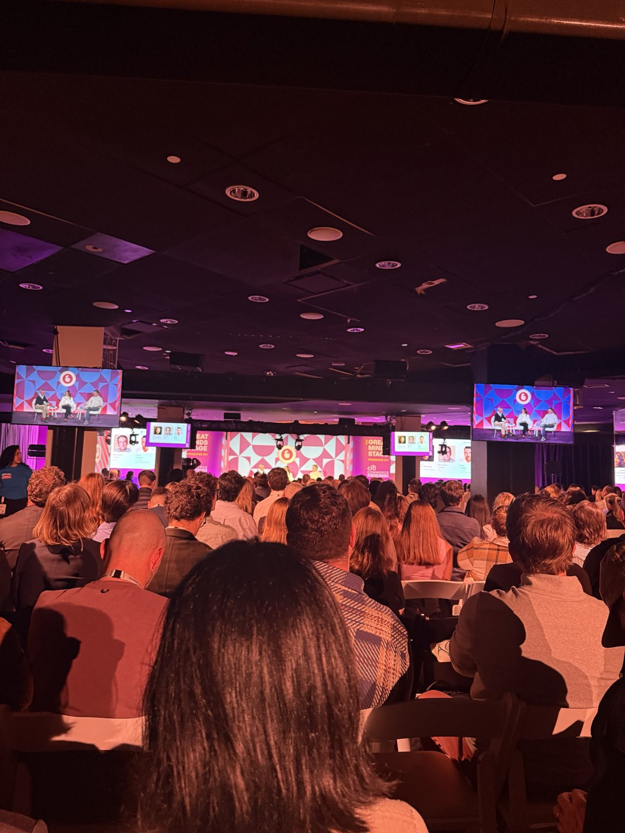
(The Penn District hosted Advertising Week New York 2026 across multiple stages and content tracks.)
Overall Summary: What Changed in One Year?
The 2025 trends did not disappear in 2026. They connected. Each theme from last year evolved into a harder, more practical question about how customers decide and how marketers prove value.
| 2025 theme | How it evolved in 2026 |
| AI Moves from Promise to Practice | AI starts to shape how consumers research and decide, not only how marketers run ads |
| Commerce Media Expands Beyond Retail | Payment and purchase data reveal what happens off the brand’s own site |
| Social Search Becomes the New Discovery Engine | Conversational AI joins social search as a place to research and compare, with ads and checkout beginning to follow |
| Measurement Modernizes: From Clicks to Causality | Incrementality and MMM are increasingly applied to real investment and business decisions |
The through-line was clear: customer decisions and business outcomes now have to be understood as one system. Part 1 starts with the customer side of that system.
Session Highlight①: Invoca × Optimum × adMarketplace — From Search to Conversation
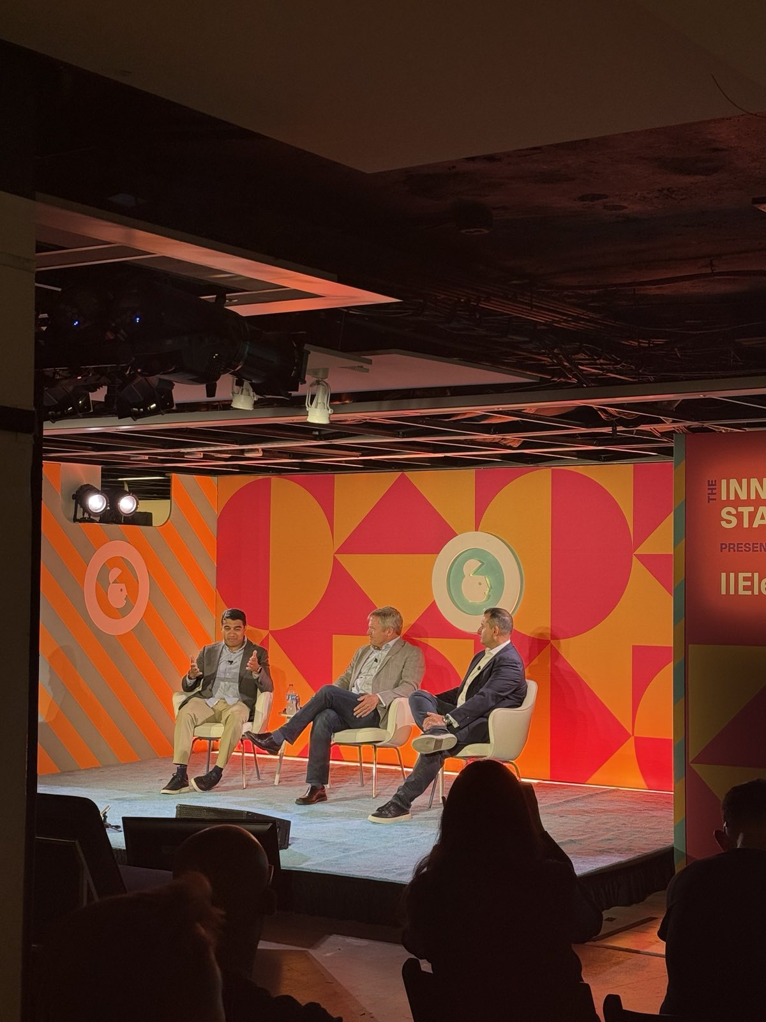
(From left: Jinx Joglekar, CMO, Optimum; Gregg Johnson, CEO, Invoca; and John Nitti, Global Chief Business Officer, adMarketplace.)
The session “Conversational Commerce in the AI Era: Where Ad, Chat, and Checkout Converge”, moderated by Ruth Mortimer, Global President of Advertising Week, opened with a candid admission. Jinx Joglekar, CMO of Optimum, noted that the ChatGPT agentic sponsored opportunity had only emerged the week before. The panel acknowledged it was still too early to know how these channels would perform or how to measure them. Even so, the conclusion was firm:
“We know the eyeballs are there. We know that as consumers, we are searching this way.“
Optimum had launched its own ChatGPT ads pilot the previous week, while also working on how the brand appears organically in LLM answers.
John Nitti, Global Chief Business Officer of adMarketplace and a former marketer at Verizon and American Express, explained why the shift matters. Research that once meant bouncing between brand websites now happens inside one conversation, and each follow-up question makes the shopper more qualified:
“A conversation that maybe used to take, like, opening 10 new tabs is now one single conversation.“
That compression creates a practical trap. It is tempting to treat AI chat like search and judge it on the same ROAS and CPC. He argued against it. Conversations pull time and attention from several stages of the funnel at once, so funding them only from the highest-intent search budget misreads what they do. In his view, a well-matched ad can even act as a service, pointing the user to the promotion actually in market rather than an expired link the model scraped.
Measuring visibility, not just clicks. Optimum’s answer to the measurement gap was to borrow from brand metrics. Rather than relying on click-through alone, the team tracks how often Optimum appears across query groups, from branded searches to “internet provider in New York”, and uses ads to extend that presence:
“You would never think about measuring share of voice in a performance channel. Yet that’s how we’re going to market.“
The reason is simple: many users get their answer and never click. As Joglekar put it, “a lot of people just actually don’t click.“
AI agents are a channel and an audience. One of the most memorable points was that LLMs both connect brands to customers and visit the brand’s site themselves. They read it differently from people: the homepage video the CEO loves may mean nothing to a crawler that wants structured information. That led to a realization about analytics practice:
“We should probably not exclude the bots.“
Rather than simply filtering that traffic out, Joglekar suggested looking at it separately from human visitors and trying to understand how agents move through the site.
Organizations have to collapse their silos. Optimum discovered that its AEO/SEO team did not know whether the company was using Google’s Business Agent, because the paid team owned it. The fix was a cross-functional “SWAT team”, with the AEO team at the center because it holds the share-of-voice data. Nitti added that funding is often the hardest part, since AI chat “doesn’t fit neatly into any one bucket.” His summary was honest: “It’s not easy. It’s messy.“
Joglekar was also realistic about where things stand today. When Optimum’s CEO asks how much traffic comes from LLMs, the honest answer for now is not that much: consumer behavior is hard to change, and many users never click.
“Still, the biggest traffic source is Google.“
For me, the key takeaway was that AI-driven discovery changes two things at once: where customers make decisions, and what brands can see. Brand visibility inside AI answers is becoming a metric to manage, and AI agent traffic is a new kind of visit to understand, separately from the human users measured in tools like GA4.
Session Highlight②: PayPal Ads — The Customer Journey You Can’t See
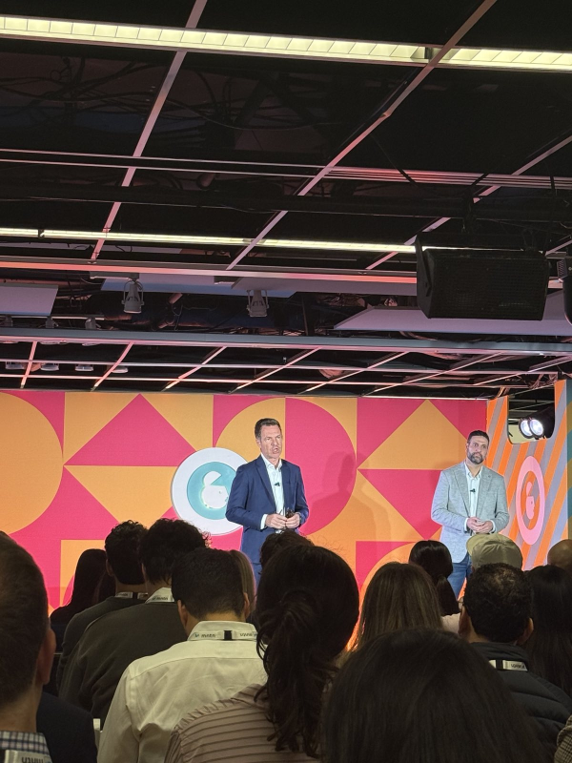
(From left: Dr. Mark Grether, SVP and GM of PayPal Ads, and Asaf Davidov, Head of Global Ad Insights & Analytics, PayPal.)
If the first session showed how AI is reshaping discovery, Dr. Mark Grether, SVP and GM of PayPal Ads, showed how much of that journey happens outside any single brand’s view. He opened with a personal story. Looking for a way to take phone calls while cycling to work along the Hudson, he asked Claude, Gemini, and ChatGPT for advice, compared options, then used PayPal Honey to find a deal on the smart glasses he finally bought.
“The way of how people actually are now searching for products, the customer journey has significantly changed.“
The journey used to run from Google to a merchant site to a purchase. Now it moves across search engines, AI assistants, and retailer sites. But one step, Grether said, still comes at the end of every path: the payment.
That is the position PayPal Ads is building on. According to the figures he shared, PayPal has roughly 400 million accounts globally (about 238 million in the U.S.), Venmo has around 100 million U.S. users, and Honey shows browsing behavior for about 35 million users. Together, the company sees about 25 billion transactions a year. The key, he stressed, is breadth across merchants:
“We are sitting basically as a horizontal layer across all merchants.“
Commerce data shows what search data can’t. Asaf Davidov, Head of Global Ad Insights & Analytics at PayPal, framed the idea as “culture moves through commerce.” Venmo payment notes showed pickleball declining in 2026 while Hyrox and rucking were rising. Google Trends looks similar on the surface, he noted, but search interest is not the same as people actually paying for something.
What a brand sees is not the full market. The most striking example was a restaurant. It knows its own customers better than anyone, including how many order directly and how many come through delivery apps. What it cannot see is the wider delivery market or its competitors’ customers. Combining those views, the restaurant captured only part of the total picture:
“They only really saw 13% of this entire market.“
This was one analysis for one restaurant, not a benchmark for every business. But it makes the point vividly: the data a brand can measure is not necessarily the full picture of what its customers do.
Asaf also introduced the “Chief Friend Officer“: the person in every friend group who organizes the plan and picks up the bill. In the restaurant category, a Chief Friend Officer has an average of 23 connections, and overall these users account for 65% of all Venmo transactions. They also tend to move first on new trends, about 70% of the time.
AI as the first stop. In the Q&A, Davidov said PayPal is seeing the shift Grether described, especially in its Honey data, where many journeys now start with an AI tool and move on to a search afterward:
“AI is becoming, you know, the first stop for most people.“
This is PayPal’s observation from its own users’ data, not a measure of all shoppers. He added that purchase journeys that historically started on Amazon are doing so less and less. Grether added that, because PayPal sees transactions across merchants, it can tie a CTV campaign to purchases at any merchant where the product is sold, not only at one retailer.
The takeaway for me was a measurement point as much as a media one. As more research happens in AI tools and on other platforms, first-party analytics shows an important but partial view of the journey. That does not make site measurement less important. It makes it more important to measure owned touchpoints accurately, and to understand what lies outside them.
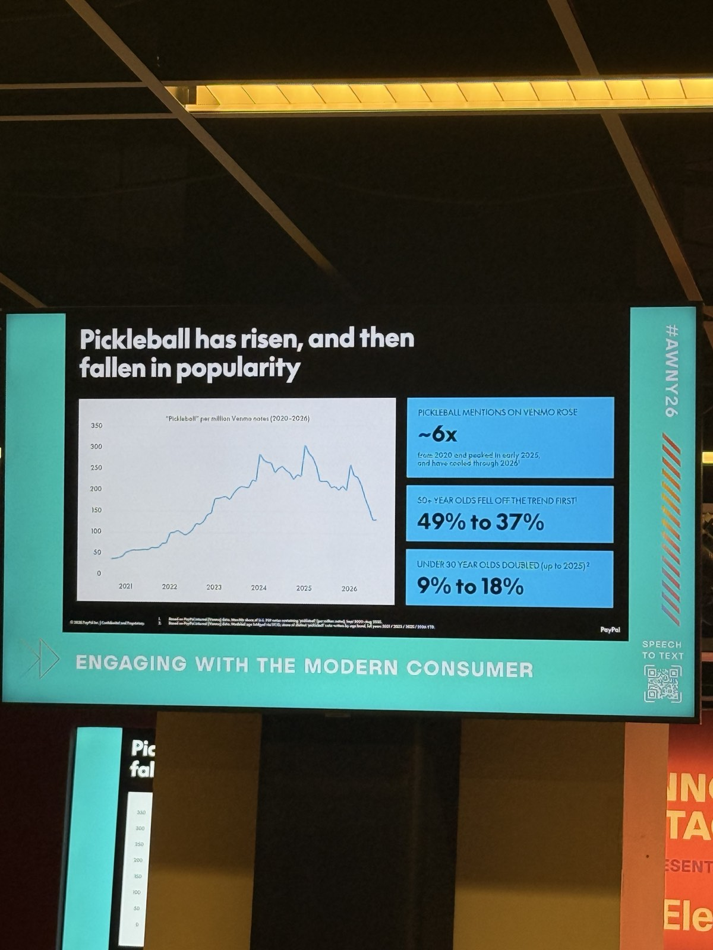
((PayPal Ads used transaction data to illustrate how consumer trends evolve beyond search interest.)
Part 1 has shown two shifts: AI is changing how customers discover and decide, and parts of their journey happen where brands cannot see them. That raises the obvious next question. If the journey is harder to observe, how do we prove what advertising really delivers? In Part 2, I’ll look at measurement through sessions from Best Buy Ads and Circana, and on building MMM in the AI era, before sharing Ayudante’s perspective.
🔜 Continue to Part 2 → [link to Part 2]