

Measuring What Matters in the AI Era: Highlights from Advertising Week New York 2026 (Part 2)
🔙 Missed the beginning? Start with Part 1 → [link to Part 1]
In Part 1, I covered how AI is changing the customer journey. Optimum and adMarketplace showed that research and comparison can increasingly happen within a single AI conversation, and that brand visibility inside those answers is becoming a metric to manage. PayPal Ads showed how much of the journey can happen where a single brand cannot see it: in one example, a restaurant saw only 13% of its market. Both sessions pointed to the same next question. If the journey is harder to observe, how do we prove what advertising actually delivers, and turn that proof into better decisions? Two sessions addressed that most directly.
Session Highlight③: Best Buy Ads × Circana — Beyond ROAS to Total Business Impact
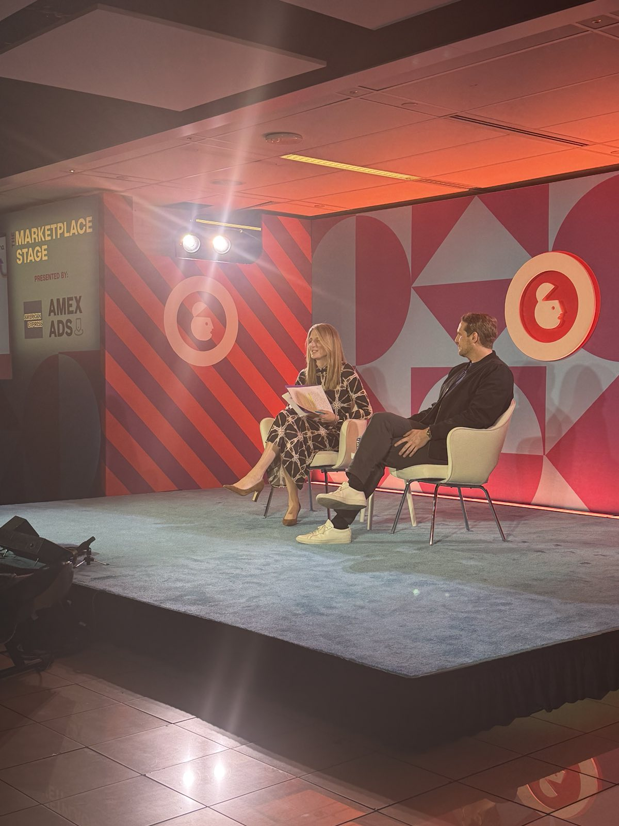
(From left: Lindsay Pullins, SVP, Global Retail Media and Commerce, Circana, and Stephen Sheron, Senior Director of Ads Analytics, Best Buy Ads.)
In “Closing the Measurement Gap: Building a Better Future for Retail Media”, Lindsay Pullins, SVP, Global Retail Media and Commerce at Circana, opened with three takeaways. The first set the tone for the whole session:
“Retail media or media should be measured against the total business impact, not just the sales at a retailer.“
She cited a recent Circana survey: 78% of shoppers exposed to retailer ads say those ads influence their purchase. But that purchase does not always happen at the retailer that ran the ad.
Stephen Sheron, Senior Director of Ads Analytics at Best Buy Ads, described a conversation he has in client meetings almost every week. Clients ask why a channel’s ROAS went up or down. His team answers with another question:
“What is the goal of the campaign? What is the business outcome you actually want to drive with this media? And it’s not 100% of the time that it’s [ROAS].“
That gap between what clients ask for and what they need is why, he said, his team is being built as consultants, not just reporters of numbers.
The study: retail media measured across the market. According to Circana’s release, this was a marketing mix modeling (MMM) study of leading brands in consumer electronics and appliances, evaluating Best Buy Ads alongside national media investments. On stage, Sheron said it covered roughly $2.4 billion in media spend over the last two years, data Best Buy provided across its channels, including upper-funnel CTV and social. Circana measured sales at Best Buy and at competing retailers, and used YouGov tracking data to measure brand equity. Several results stood out:
- Share of media vs. share of sales: Best Buy Ads accounted for roughly 17% of the media mix measured, which included competing media that Circana pulled in through its partnership with MediaRadar. Yet, Sheron said, it drove about 35% of the media-driven sales measured for those advertisers.
- Halo effect: According to Circana’s release, nearly 16% of the media-driven sales associated with Best Buy Ads occurred at competing retailers.
- Brand equity contribution: Also per the release, Best Buy Ads contributed nearly 10% of measured brand equity value. This is Best Buy Ads’ share of the brand equity value measured in the model, not a lift in brand awareness. Sheron noted that this came “without any optimizations” and before bringing in a full-funnel CTV partner.
The halo effect was the most interesting point for me. Those sales would not appear in retailer-only reporting. As he put it:
“We’re only one component in the customer journey, and we need to be thinking beyond just that lower funnel sale at Best Buy.“
He went further, suggesting that incrementality itself should be reframed around growth. Best Buy runs gold-standard experiments such as geo tests and RCTs, but the real question for an advertiser is whether the strategy across the funnel grows the business.
This was, to me, the natural evolution of last year’s “from clicks to causality” theme. In 2025, the industry was arguing for incrementality and MMM. In 2026, Best Buy and Circana showed what happens when real purchase data and brand metrics are combined to test the value of advertising. The lesson applies well beyond retail media: what appears in GA4 or an ad platform’s reporting is essential, but it is not always the full business value advertising creates. The value of advertising should not be limited to where the conversion is recorded.
Session Highlight④: Magellan AI × Base Note Data × Right Side Up — Can You Build Your Own MMM?
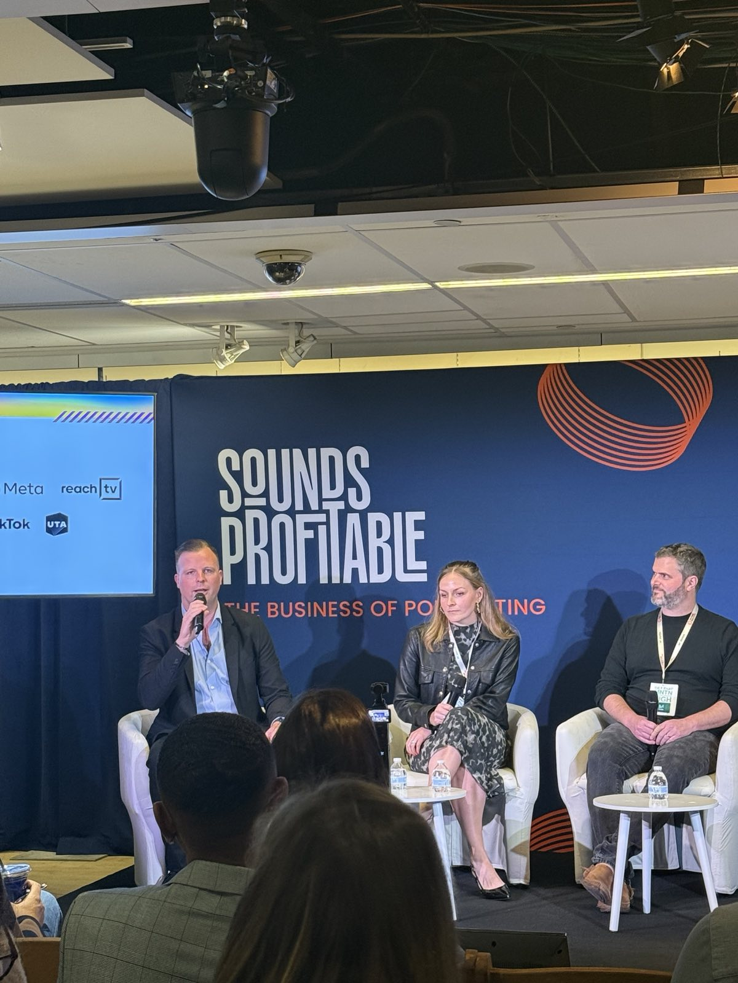
(From left: Grant Durando, Director, Offline Practice, Right Side Up; Chelsea Cramer, Founder, Base Note Data; and Cameron Hendrix, CEO, Magellan AI.)
If Best Buy showed why total business impact matters, the next question is practical: who can build the models that measure it? With everyday professionals now using Claude Code, Codex, and similar tools to build their own apps, this panel asked whether marketers can build a marketing mix model (MMM) themselves instead of buying a managed service.
Moderator Grant Durando, Director of the Offline Practice at Right Side Up, started with a quick poll. Many hands went up when he asked who had used an MMM. When he asked who trusted theirs, he counted only about 20% of hands still up. That, he said, is the core challenge:
“How do you drive legitimacy from a third-party attribution system?“
From a single source of truth to a “triangle of truth.” Cameron Hendrix, CEO of Magellan AI, explained how the methods fit together. Attribution is the bottom-up view of what an impression drove, incrementality is the experimental view against a holdout, and MMM is the top-down view over a longer history. He also encouraged brands to split audio into podcast, streaming audio, and broadcast rather than one line, because each behaves differently. Chelsea Cramer, Founder of Base Note Data, described where many brands have landed:
“I think a lot of us have given up on this idea of the single source of truth. So now I think about it more as like the triangle of truth.“
In her framework, MMM, incrementality tests, and click-based tracking work together. Incrementality results can be fed into the MMM, and its prior assumptions can be adjusted based on attribution data the team has more confidence in.
AI helps most with data quality. Cramer’s own example was practical rather than flashy. Using an LLM, her team built an alert that spots incorrectly tagged campaigns and automatically flags them in Slack for the channel owner to review. It saved the team, she estimated, hundreds of hours over the past year. Her broader point applies to any MMM:
“Data will always have errors.“
Whether at a Fortune 10 company or a small startup, she said, those errors are a given. She sees AI as a tool to help minimize them, for example by flagging to an MMM vendor that a partner’s data will arrive late.
Building is easy; trusting is hard. The panel was candid about the risks. Durando warned of the tech debt created “when you start just throwing a bunch of AI stuff around your organization.” Cramer added that AI makes it much easier for anyone to build a model and decide it beats a partner with years of experience, which makes trust harder to judge, not easier.
When she tried building an MMM in Claude herself, the result was “something that’s fine.” What it lacked was the industry expertise a specialist partner brings, and one critical step:
“When I tried to do it with Claude, it didn’t talk about backtesting at all.“
Backtesting means removing the most recent weeks of data, such as the last four, and checking whether the model can predict actual performance for that period. If it can’t, she said, “it’s actually useless.” Her advice was nuanced: a self-built model can provide useful signal, but a company spending hundreds of millions a year should leave it to experts.
Hendrix captured the balance with a phrase he had been thinking about:
“Design is cheap, taste is expensive.“
AI can write the code, he explained, and “the AI will 100% give you an answer. It just may not be, you know, correct” unless you understand why it is giving you that answer.
From readout to decision. Looking 12 to 18 months ahead, Cramer expects channels once seen as unmeasurable, such as sponsorships and influencers, to feed into MMM as their data becomes more accessible. She also pointed to a continuing shift toward “rapid MMMs,” with some vendors now returning results about a week after spend rather than after the traditional three-month wait, giving teams more flexibility to scale budgets up or down. Durando added that AI has become competition for a lot of enterprise B2B software, and “MMMs are not immune to that.“
The takeaway for me was balanced. AI can make measurement tools more accessible and, with some vendors, faster. But reliable decisions still depend on reliable data, proper validation such as backtesting, and the human expertise to judge whether an answer is right.
Closing: From Measuring Performance to Enabling Better Decisions
Across these four sessions in New York, three messages stood out to me.
First, AI is no longer only changing how marketers work. It is starting to change how customers discover, compare, and decide, sometimes inside conversations brands cannot see directly.
Second, what a brand can measure directly is only part of what customers do. AI answers that never produce a click, purchases at competing retailers, a restaurant that saw 13% of its market in one analysis: each is a reminder that some of marketing’s value sits outside the reports we look at every day.
Third, measurement only matters when it changes a decision. Best Buy, Circana, and the MMM panel made the same point in different ways: the goal is not a better ROAS figure or a faster model, but validated evidence that the business trusts enough to act on.
Last year, I closed my report with the belief that better measurement unlocks better marketing. This year, I would take that one step further:
The next competitive advantage in marketing will not come from AI adoption alone, but from the ability to connect trustworthy data, meaningful measurement, and better business decisions.
Adopting AI tools is quickly becoming table stakes. As customer behavior grows more complex, the foundation of trusted data and measurement matters more, not less. A few questions are worth asking:
- Can you see how your brand appears in AI answers, and how AI agents interact with your site?
- Are important web and app actions measured correctly, with consistent definitions across teams?
- Can digital data connect to CRM, sales, and offline outcomes?
- Is your data reliable enough to support experiments, MMM, and AI-assisted analysis?
- Do your measurement results actually feed budget and business decisions?
None of this makes first-party measurement less important. As more of the journey happens off-site, accurate data about what happens on your own website and app becomes the anchor that other business data connects to: CRM, sales, experiments, and models.
At Ayudante, we help build that foundation: accurate event measurement and measurement design with GA4 and GTM, including server-side measurement; data integration and visualization with BigQuery and BI; connecting web and app data with CRM and sales data to understand business outcomes; and SEO for both traditional and AI search. The goal is a reliable data foundation that incrementality testing, MMM, and AI-assisted analysis can build on, whether those are run in-house or with specialist partners. Our solution MATSUBA (Data Ownership Engine) helps advertisers build their ad measurement foundation in their own environment, so they keep ownership of their measurement data. We see our role not as tool implementation, but as building the data foundation for better decisions in the AI era.
If these themes resonate, join us on November 10, 2026 in New York for our free in-person seminar,
The biggest lesson from New York was not that marketers need more AI. It was that as AI changes how customers decide, the ability to connect data to decisions becomes the real differentiator. I’m already looking forward to seeing how these conversations evolve at next year’s event.
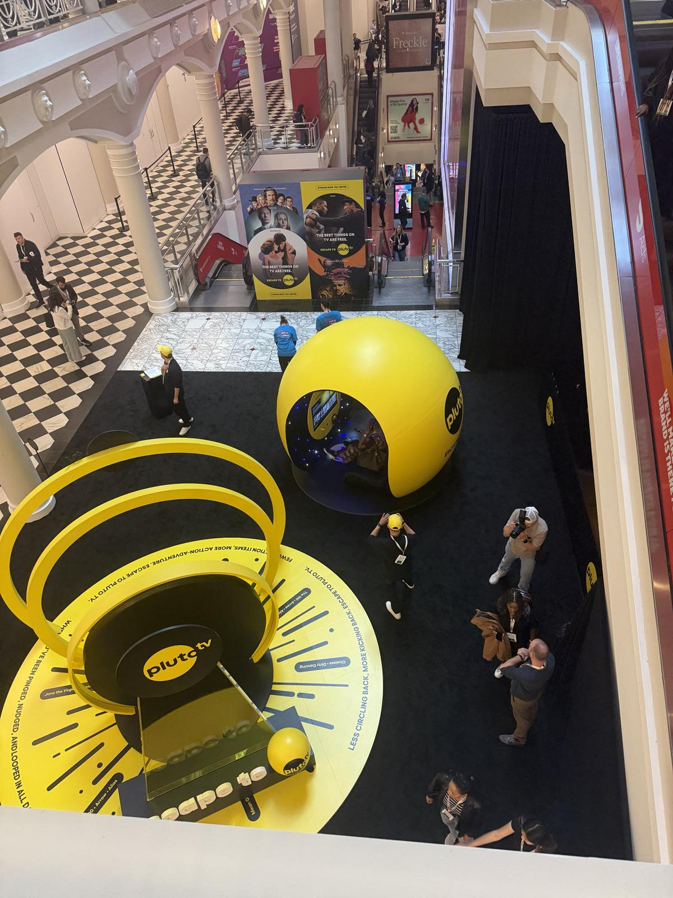
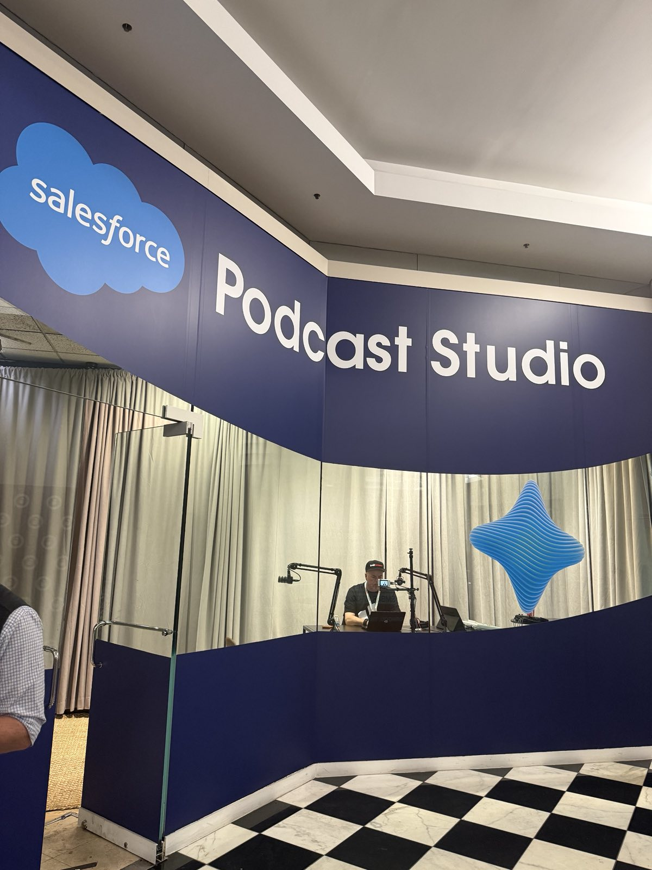
(A glimpse of Advertising Week New York 2026.)